Drew Gandy did something most Ansley Park homeowners never think to do. Before the Atlanta City Council could vote on whether his street would become a local historic district, he asked for sixty extra days so he could pay for his own independent appraisal, one that would tell him, in dollars, what a "yes" vote might do to his house. He wasn't against preservation on principle. He said his concerns were specific to how this particular proposal was written. But the fact that a homeowner felt he needed a formal valuation just to understand the zoning fight happening on his own street tells you something the final vote count doesn't: this was never only a preservation argument. It was a pricing argument that hadn't been priced yet.
On September 8, the Atlanta City Council settled it, at least for now. Members voted 11 to 4 to shelve the proposal to make Peachtree Circle, a single tree-lined street on the western edge of Ansley Park, a city historic district. After fifteen months of tense meetings, online campaigns, and by one resident's account an actual physical altercation between neighbors, the effort died because organizers couldn't reach the threshold Councilman Alex Wan had set: two-thirds of the affected property owners in favor. Roughly 40 of 72 parcels supported it. That's a majority, but not the supermajority Wan wanted before he'd carry it to a vote himself.
David Y. Mitchell, executive director of the Atlanta Preservation Center, had been working alongside the proponents through the process. After the vote, he framed the loss as a pause rather than an ending, saying that a majority being able to block something doesn't mean the people who wanted it are giving up. Preservation advocates in Atlanta have heard that kind of resolve before. This is at least the third attempt at historic protection in Ansley Park since Wan took office in 2010. The most recent prior attempt fell apart in 2022 after a lawsuit from a property rights advocate. This one didn't end in court. It ended inside the neighborhood, at a vote count that never reached the threshold organizers needed.
Why a "no" vote here tends to stick
Here's the detail that matters if you're evaluating a home on this street rather than reading about the fight from a distance. According to the Ansley Park Civic Association's own account of the city's preservation ordinance, no historic district in Atlanta has ever had its designation removed since the current ordinance took effect in 1989. Districts get created, sometimes expanded, but they don't get undone. That asymmetry cuts both ways. It's part of why the debate got so heated. Once a "yes" happens, it's close to permanent. But it also means a "no" isn't a temporary condition either. Given the track record, three failed attempts since 2010, a divided owner base, and a council member who's already said he'll only revisit this with a genuine supermajority, Peachtree Circle is more likely looking at years without protection than months.
That's not a value judgment. It's a planning fact for anyone comparing this street, or this neighborhood, to others where the zoning question has already been resolved one way or the other.
What the missing protection actually prices in
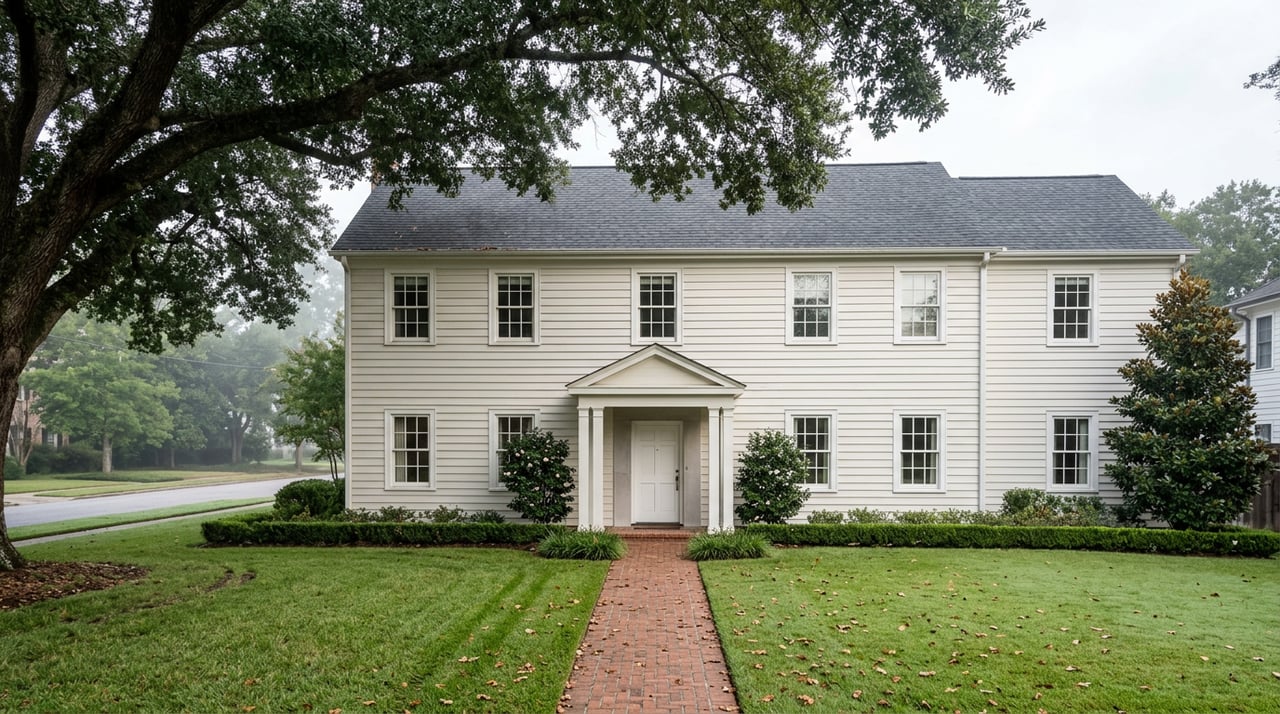
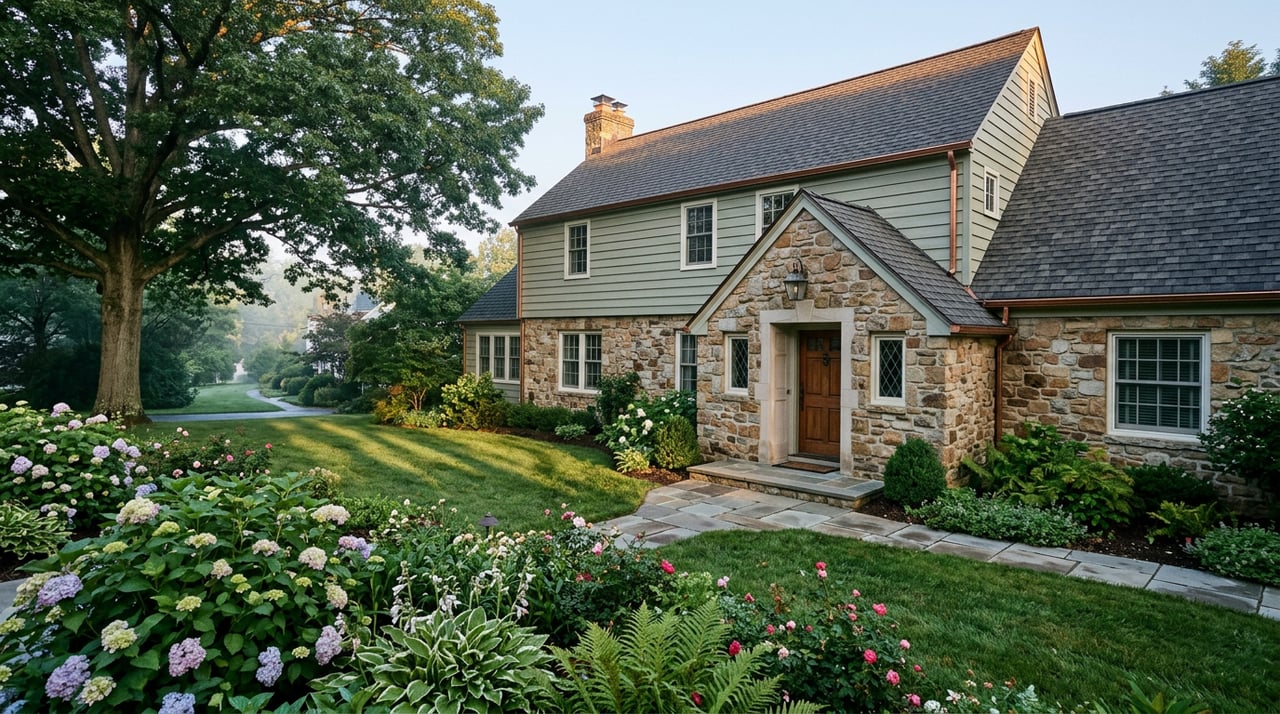
The push for a historic district didn't come out of nowhere. It was triggered in January 2026, when the new owners of 205 Peachtree Circle demolished an American Craftsman-style home that had stood on the street for more than a century, in order to build a larger house on the acre-plus lot. The city had approved the demolition permit before any moratorium could stop it. Just months before that demolition, on the same street, a different story played out: the Randolph-Lucas-Jones House, a historic structure that had been moved from its original site at Peachtree Road and Lindbergh Drive, received an individual city landmark designation in July 2025 after years of restoration work by its owners, Roger Smith and the late Christopher M. Jones. One house on Peachtree Circle got permanent protection. Another, just as old, got razed. That contrast is Peachtree Circle in miniature, and it's the clearest illustration of what the failed vote leaves in place.
| With a local historic district | Without one (current status) | |
|---|---|---|
| Demolition of a contributing home | Requires a Certificate of Appropriateness from the Atlanta Urban Design Commission | Requires only a standard demolition permit |
| New construction on a cleared lot | Must follow district setback, height, and massing rules | Follows only the underlying zoning, which allows larger footprints |
| National Register status | More secure, since fewer contributing structures are lost | At risk, per the Georgia Trust for Historic Preservation, if demolitions continue |
That right-hand column is what every buyer or seller on Peachtree Circle, and by extension in the older sections of Ansley Park more broadly, is actually transacting against right now. An older home there isn't just a structure with a certain number of bedrooms and a certain roofline. It's a structure sitting on land that already has a demonstrated, recent, city-approved path to something larger. That possibility has a price. It just doesn't show up as a line item.
What the sales numbers are already showing
This is where the story stops being about zoning and starts being about the deal itself. Ansley Park's headline numbers look strange this year if you take them at face value. As of June 2026, the median home sale price in the neighborhood had climbed to roughly $1.55 million, up about 25 percent year-over-year. Price per square foot has also been climbing, up around 15 percent over the trailing year according to recent multiple listing data. Those two figures tell a growth story. But the average sale price over the trailing twelve months was reported down about 9 percent from the prior twelve-month period.
A rising median, a rising price per square foot, and a falling average sale price aren't contradictory once you stop treating Ansley Park as one market. They're consistent with two markets sharing the same zip code. One is finished, renovated, or newly built product, the kind of home that commands a premium per square foot because the buyer isn't taking on any construction risk. The other is older housing stock still priced closer to land value, because a buyer evaluating it has to price in the cost, timeline, and uncertainty of a teardown and rebuild, the same path that 205 Peachtree Circle already took. When more of the second kind of home sells in a given period, the average can dip even while the top end of the market keeps pushing the median and the per-square-foot figure higher. That split is not something a portal-level median tells you. It's something you only see by asking what kind of house is actually behind each sale.
How Ansley Park's outcome compares to its neighbors
Ansley Park didn't have to end up here. During the debate, Councilwoman Mary Norwood pointed to her own Tuxedo Park neighborhood, which faced a similar fight and resolved it with an overlay district, a lighter-touch tool that offers some protection over redevelopment and character without the full weight of historic district rules. Peachtree Circle's organizers pursued the stronger designation instead, and when they couldn't reach consensus on that, the process didn't fall back to a middle option. It just stopped.
Just across town, Inman Park already holds the kind of local historic district designation that Peachtree Circle's effort could not secure, the same Certificate of Appropriateness requirement for demolition that Ansley Park's own civic association has cited as protection Peachtree Circle still lacks. If you're comparing Ansley Park to Inman Park or to Tuxedo Park on a spreadsheet of median prices and walk scores, that difference in zoning outcome belongs on the same page. It's part of what you're actually buying, or selling, in each place.
What this means if you're on either side of a deal here
If you're buying an older home in this part of Ansley Park, the practical questions are different from the ones a portal listing will answer for you:
- Has the home received any individual protection, such as a Georgia Trust preservation easement, the kind at least one owner on 17th Street has already pursued
- What is the lot's actual buildable footprint under current zoning, separate from the existing structure
- Has a comparable teardown on the same street, like 205 Peachtree Circle, already established a precedent for scale and setback
If you're selling, the same facts cut the other way. A home that's been renovated to a high standard is now competing in a market where a meaningful share of buyers are pricing in land value on comparable listings down the street. Knowing which category your home falls into, and marketing accordingly, matters more here in the next few years than it might in a neighborhood where the zoning question was already settled one way or the other.
A few questions worth asking before you write an offer
Does the National Register listing protect Ansley Park homes from demolition? No. The neighborhood has held that designation since 1979, but it only recognizes historic significance. It doesn't require city review before a home is altered or torn down. Only a local historic district or an individual landmark designation does that.
Could Ansley Park lose its National Register status? The Georgia Trust for Historic Preservation has said the ongoing pace of demolitions puts that status at risk if enough contributing homes are lost. It hasn't happened, but it's the concern preservation advocates cite most often.
Could the historic district effort come back? Councilman Wan has said he would reintroduce it if organizers can demonstrate a genuine two-thirds supermajority of affected owners. Given the neighborhood's history, that's a real possibility, but not one with a clear timeline.
Ansley Park's real estate story right now isn't the median price. It's what sits underneath it, block by block, depending on whether the house you're looking at already has its future decided or is still, quietly, priced as an open question.
If you're trying to figure out where a specific Ansley Park property sits in that split, whether it's priced as a finished home or as land with upside, Stacy Shailendra can walk through the comparables with you. Request Your Home Valuation and get a read on your property that accounts for what the zoning history actually means for your number.